The Southern African Science Service Centre for Climate Change and Adaptive Land Management (SASSCAL) and Cleanergy Solutions Namibia have signed a new €2.057 million Funding and Cooperation Agreement, signalling the official launch of Phase 2 of the Cleanergy Hydrogen Plant and Refuelling Station in Walvis Bay. The agreement was officially signed on 17 September 2025 by Prof. Nelago Indongo, Executive Director of SASSCAL, and Mr. Eike Krafft, CEO of Cleanergy Solutions Namibia, in a move that reinforces Namibia’s position as a front-runner in Africa’s green hydrogen transition.
Prof. Nelago Indongo, Executive Director of SASSCAL, and Mr. Eike Krafft, CEO of Cleanergy Solutions Namibia
The funding for this project is provided by the German Federal Ministry of Research, Technology and Space (BMFTR) through SASSCAL, under the Joint Communiqué of Intent (JCoI) between the Namibian and German governments. The agreement builds on the successful implementation of Phase 1.
Under this agreement, Cleanergy will implement seven targeted interventions: introducing a mobile hydrogen refueller, converting trucks and a bus to dual-fuel use, installing hydrogen-powered generators, enhancing awareness and training, equipping testing laboratories, supporting UNAM’s infrastructure needs, and conducting solar PV cleaning and degradation studies.
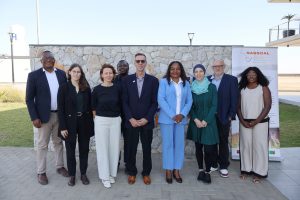
A group photo of SASSCAL’s Executive Director, Prof. Nelago Indongo; Mr. Eike Krafft, CEO of Cleanergy Solutions Namibia; BMFTR representative, Mrs. Kerstin Annassi; along with SASSCAL and Cleanergy team members during the site visit.
Advancing Local Innovation, Research, and Skills Development
Phase 2 focuses on expanding Cleanergy’s infrastructure, hydrogen applications, and capacity-building efforts in Namibia. One of the cornerstone innovations under this agreement is the introduction of Namibia’s first mobile hydrogen refuelling unit, designed to support both stationary and mobile hydrogen-powered equipment. The deployment of hydrogen-powered vehicles, including converted dual-fuel trucks and a bus, will enable real-world testing of clean mobility solutions on Namibian roads.
To ensure that the technology rollout is matched by local knowledge, the agreement also supports the expansion of Cleanergy’s Hydrogen Training Centre, which will host training, research, and safety demonstrations for Namibian learners, technical staff, and international partners. The facility will also be equipped with state-of-the-art laboratory and testing equipment, enabling hands-on experimentation and data generation for both Cleanergy and visiting learners.
Further reinforcing academia–industry linkages, the agreement provides for the installation of utility connections at the University of Namibia’s planned testing facility, making it possible for students and researchers to explore hydrogen and solar PV innovations in a real-world setting.
Another key element of Phase 2 is a collaborative research initiative between Cleanergy and the University of Namibia on solar PV panel cleaning and performance degradation, aimed at understanding optimal cleaning methods and intervals in desert conditions. This knowledge will inform future large-scale renewable energy deployments across Namibia.
A Shared Vision for Namibia’s Hydrogen Economy
The Phase 2 agreement reflects a strong commitment to sustainability, technology transfer, and inclusive industrial development. With BMFTR’s support channelled through SASSCAL, the project exemplifies a model for public–private–academic collaboration.
As Cleanergy Solutions Namibia moves forward with Phase 2 implementation, SASSCAL will continue to play a central role in facilitating partnerships, monitoring progress, and ensuring that the initiative delivers long-term value for Namibia and the Southern African region.


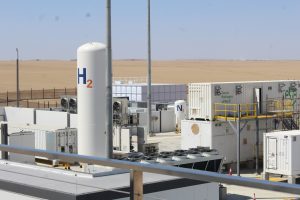
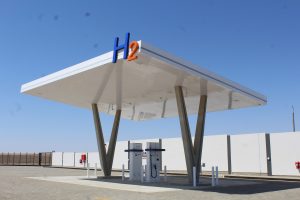
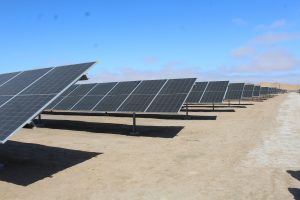
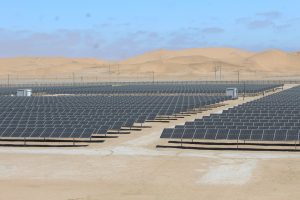
Scenes from the site visit at Cleanergy Solutions Namibia